Sheep
Sheep were historically present at Hopewell Furnace as part of the expansive working of an 18th/19th century iron furnace operation. Most of Hopewell’s sheep were probably mixed breeds, made up of whatever sheep were available locally and could render the preferred qualities of meat or wool.
Sheep have been part of the National Park Service's’ interpretation of the site for over fifty years. Over the years the sheep previously on site became a mix of multiple breeds producing a wool difficult to utilize in fiber arts demonstrations at the park.
One exception was noted in the sale of “1 marino (sic) ram” by the furnace company to one of its employees for the sum of $6.05 in 1818. The Merino was a recently arrived and highly prized breed of sheep in America during the early 19th century. Its wool was of the highest quality and Merino rams were often used to upgrade wool in offspring from females of other breeds with lesser quality wool.
Routine inspection of the flock identified the infestation of the sheep with the barber pole parasite in early 2025. This parasite will weaken the sheep and make them more susceptible to diseases. The life cycle of this parasite involves both the animals and the pastures on which the sheep graze. The most effective way to eradicate the parasite is to cut the connection between the pasture and animals by taking the sheep off the pasture for one year. The health concerns of the sheep were identified around the same time planning had begun for relocating our current flock for a more appropriate breed. A new home was identified for the sheep at Ross Farm in Eighty Four, Pennsylvania. Ross Farm is a family-owned business that strives to practice the latest methods of animal husbandry and farm design with a focus on heritage breeds. The farm has experience dealing with sheep with the barber pole worm and has facilities to allow treatment of the animals. Ross Farm picked up the 13 sheep from Hopewell Furnace on June 10 2025 and transported them to Eighty Four, PA. The sheep had acclimated well to their new home.
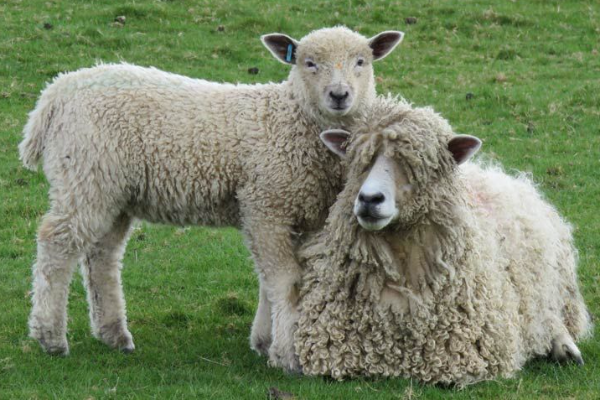
The park is making plans to return a more accurate heritage breed to the Park. The Leicester Longwool breed has been selected. This breed produces a longer, finer fibered wool allowing for greater variety of uses for the wool in the park’s various fiber arts programming.
The Leicester Long Wool is a British sheep breed that was developed in the 18th century. It is a cross between the English Leicester and the Cotswold breeds. The Leicester Long Wool is known for its long, lustrous fiber which is perfect for spinning and weaving. It is also an excellent meat sheep, with high-quality carcasses. This sheep breed is named for the English county of Leicester. The Leicester Longwool is known for its long, lustrous wool which is often used for knitting and weaving. The sheep are also known for their lean meat, which has a delicate flavor.
The breed is very docile and easy to handle. Leicester Longwools are known for their adaptability to live and thrive under a wide variety of conditions and climates. The fleece of the Leicester Longwool is very distinctive and a very important part of the breed. The usual colors in the breed are white, "English Blue," which is a shaded gray, and black.
The fleece of the Leicester Longwool is prized by hand spinners and crafters for its curl, soft handle, and lustrous beauty. The wool dyes exceptionally well, maintaining the purity of color; the natural luster still shines through. This premium wool is very versatile, working well for combing for worsted products, carding for woolen products, and felting projects. The Leicester can be shorn twice per year. The Leicester Longwool is a medium to large polled breed with a high quality carcass, whose poll is well covered with locks of wool. Mature rams weigh 200-300 pounds and ewes weigh 150-200 pounds.
The fleece of the Leicester Longwool is prized by hand spinners and crafters for its curl, soft handle, and lustrous beauty. The wool dyes exceptionally well, maintaining the purity of color; the natural luster still shines through. This premium wool is very versatile, working well for combing for worsted products, carding for woolen products, and felting projects. The Leicester can be shorn twice per year. The Leicester Longwool is a medium to large polled breed with a high quality carcass, whose poll is well covered with locks of wool. Mature rams weigh 200-300 pounds and ewes weigh 150-200 pounds.
------------------------------