Steers and Chickens
As many as 20 steer would be butchered in the autumn to provide meat for the ironmaster’s house and to sell to workers at the store. One common breed of cattle at the time was the short-horned “Devon.” Hardy and versatile, they not only provided food products derived from cattle, but could also be trained to be draft animals (oxen) for pulling vehicles and farm implements. Hopewell purchased at least one team of oxen during its operations.
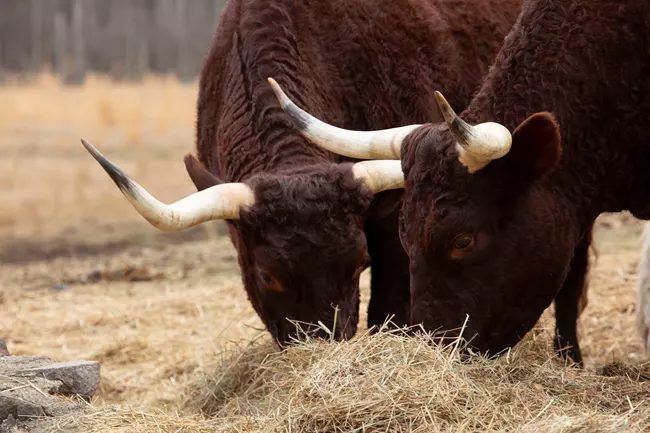
Two Red Devon Steers are at the park and can be seen grazing in the western pasture near the village.
Two Red Devon Steers are at the park and can be seen grazing in the western pasture near the village.
A variety of poultry including chickens, geese, turkeys, and ducks could be found at the farmsteads and tenant houses of the furnace community. Small in size, but large in importance, they provided meat and eggs for cooking as well as feathers for stuffing mattresses and pillows. Allowed to “free-range,” their foraging reduced the number of insects around homes and barns.
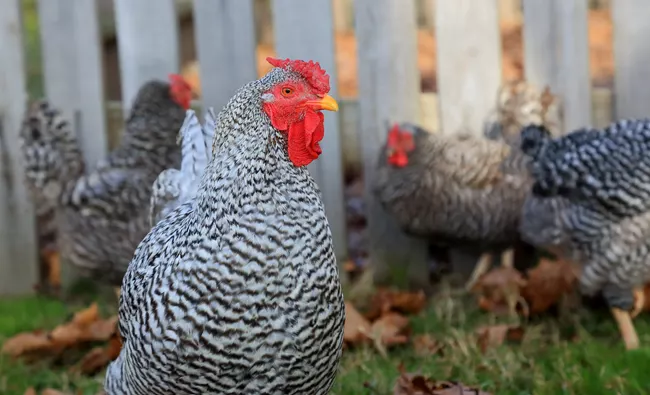
The chickens presently kept at Hopewell belong to the “Dominique” breed. Recognized as early as the mid-18th century, the Dominique self-developed from various breeds of chickens first brought to the continent by European settlers. Prior to the 1840’s, the Dominique had no equal in the farmyards or doorways of our developing country. Hardy, easily raised and productive for eggs and meat, they were the best variety for common use on farms or in town.
The chickens presently kept at Hopewell belong to the “Dominique” breed. Recognized as early as the mid-18th century, the Dominique self-developed from various breeds of chickens first brought to the continent by European settlers. Prior to the 1840’s, the Dominique had no equal in the farmyards or doorways of our developing country. Hardy, easily raised and productive for eggs and meat, they were the best variety for common use on farms or in town.
-------------------